Appendix A Answers to Practice Exercises
1 Basic Concepts
1.6 Practice Exercises
1.6.2.
1.6.3.
2 Major Scales and Key Signatures
2.4 Practice Exercises
2.4.1.
2.4.2.
3 Minor Scales and Key Signatures
3.4 Practice Exercises
3.4.1.
3.4.4.
4 Basics of Rhythm
4.7 Practice Exercises
4.7.1.
4.7.2.
Answer.
a. Time Signature: \(\begin{smallmatrix}12\\16\end{smallmatrix}\); Meter: Compound Quadruple
b. Time Signature: \(\begin{smallmatrix}3\\2\end{smallmatrix}\); Meter: Simple Triple
c. Time Signature: \(\begin{smallmatrix}3\\8\end{smallmatrix}\); Meter: Simple Triple
d. Time Signature: \(\begin{smallmatrix}4\\2\end{smallmatrix}\); Meter: Simple Quadruple
4.7.3.
4.7.4.
4.7.5.
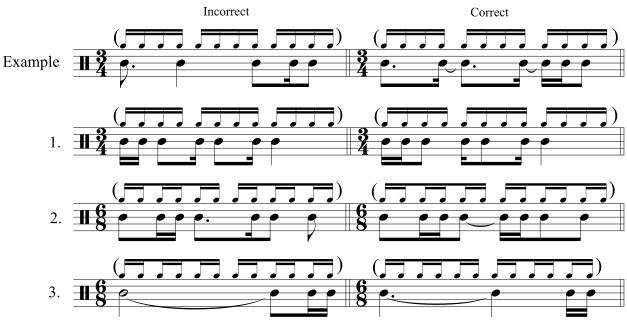
Answer.
5 Intervals
5.6 Practice Exercises
5.6.1.
5.6.2.
5.6.3.
5.6.4.
6 Triads
6.7 Practice Exercises
6.7.1.
6.7.2.
6.7.3.
Answer.
1. \(\left.\text{D}\text{m}\middle/\text{F}\right.\), 2. \(\left.\text{G}\text{m}\middle/\text{D}\right.\), 3. \(\left.\text{A}^♯{}^{\circ}{}\middle/\text{C}^{♯}\right.\), 4. \(\left.\text{F}\middle/\text{A}\right.\), 5. \(\left.\text{B}^♭{}\middle/\text{F}\right.\), 6. \(\left.\text{C}\text{m}\middle/\text{G}\right.\)
6.7.4.
6.7.5.
7 Roman Numerals and Cadences
7.5 Practice Exercises
7.5.1.
Answer.
1. \(\left.\text{F}^♯{}\text{m}\right.\), \(\left.\text{ii}\right.\); 2. \(\left.\text{D}^♯{}^{\circ}{}\middle/\text{F}^{♯}\right.\), \(\left.\text{vii}^{\circ}{}\middle/\text{3rd}\right.\); 3. \(\left.\text{A}\right.\), \(\left.\text{VII}\right.\); 4. \(\left.\text{G}\right.\), \(\left.\text{V}\right.\); 5. \(\left.\text{B}\text{m}\middle/\text{F}^{♯}\right.\), \(\left.\text{ii}\middle/\text{5th}\right.\)
7.5.2.
7.5.3.
Answer.
a. “Columbia, the Gem of the Ocean”: 1. \(\left.\text{G}\right.\), \(\left.\text{I}\right.\); 2. \(\left.\text{D}\right.\), \(\left.\text{V}\right.\); 3. \(\left.\text{G}\right.\), \(\left.\text{I}\right.\); 4. \(\left.\text{C}\right.\), \(\left.\text{IV}\right.\); 5. \(\left.\text{G}\right.\), \(\left.\text{I}\right.\); 6. \(\left.\text{D}\right.\), \(\left.\text{V}\right.\); Cadence type = Half Cadence (HC)
b. “Could You Be Loved”: 1. \(\left.\text{D}\right.\), \(\left.\text{I}\right.\); 2. \(\left.\text{B}\text{m}\right.\), \(\left.\text{vi}\right.\); 3. \(\left.\text{G}\right.\), \(\left.\text{IV}\right.\); 4. \(\left.\text{D}\right.\), \(\left.\text{I}\right.\); Cadence type = Plagal Cadence (PC)
8 Seventh Chords
8.4 Practice Exercises
8.4.1.
Answer.
4. \(\left.\text{B}\text{m}^{7}\middle/\text{D}\right.\), \(\left.\text{iii}^{7}\middle/\text{3rd}\right.\)
5. \(\left.\text{C}^♯{}^{\circ}{}^{7}\middle/\text{E}\right.\), \(\left.\text{vii}^{\circ}{}^{7}\middle/\text{3rd}\right.\)
8.4.2.
8.4.3.
Answer.
a. “No Scrubs”: 1. \(\left.\text{D}^♭{}\text{m}^{7}\right.\), \(\left.\text{iv}^{7}\right.\); 2. \(\left.\text{A}^♭{}\text{m}\right.\), \(\left.\text{i}\right.\); 3. \(\left.\text{E}^♭{}^{7}\right.\), \(\left.\text{V}^{7}\right.\); 4. \(\left.\text{A}^♭{}\text{m}\right.\), \(\left.\text{i}\right.\)
b. Mozart: 1. \(\left.\text{C}\right.\), \(\left.\text{I}\right.\); 2. \(\left.\text{G}^{7}\middle/\text{D}\right.\), \(\left.\text{V}^{7}\middle/\text{5th}\right.\); 3. \(\left.\text{C}\right.\), \(\left.\text{I}\right.\); 4. \(\left.\text{F}\middle/\text{C}\right.\), \(\left.\text{IV}\middle/\text{5th}\right.\); 5. \(\left.\text{C}\right.\), \(\left.\text{I}\right.\); 6. \(\left.\text{G}^{7}\middle/\text{B}\right.\), \(\left.\text{V}^{7}\middle/\text{3rd}\right.\); 7. \(\left.\text{C}\right.\), \(\left.\text{I}\right.\); Cadence type: Authentic Cadence (AC)
9 Harmonic Progression and Harmonic Function
9.9 Practice Exercises
9.9.1.
9.9.2.
9.9.3.
Answer.
1. 4 flats in key signature, iv, B♭-D♭-F
2. 3 sharps in key signature, IV, D-F♯-A
3. 3 flats in key signature, iiº/3rd, F-A♭-D
4. 4 sharps in key signature, vi, C♯-E-G♯
5. 2 flats in signature, viiº7, F♯-A-C-E♭
6. 5 sharps in key signature, V7/5th, C♯-E-F♯-A♯
7. 1 flat in key signature, i/3rd, F-A-D
8. 1 flat in key signature, iii, A-C-E
9.9.4.
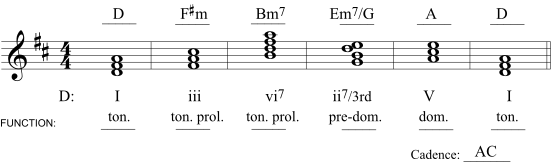
Answer.

10 Non-Chord Tones
10.12 Practice Exercises
10.12.1.
Answer.
| Non-Chord Tone Type | Approached by | Left by |
| RETARDATION | same tone | step up |
| ESCAPE TONE | STEP | leap in opposite direction |
| PASSING TONE | step | step in same direction |
| APPOGGIATURA | leap | STEP |
10.12.2.
Answer.
a. “Stop! In the Name of Love” example
Lead-sheet symbols: Am, G/B, F, G
Roman numerals: vi, V/3rd, IV IVM7, V
Measure 2: 7-6 suspension in voice part and in right hand of piano, appoggiatura in left hand of piano
Measure 3: 9-8 suspension (or incomplete neighbor) in voice part and right hand of piano
Measure 4: 6-5 suspension in voice and right hand of piano
b. Robert Schumann example
Pickup measure: appoggiatura in right hand of piano;
Measure 1: appoggiatura in left hand of piano; 7-6 suspension, appoggiatura in right hand of piano; Roman numeral: iv/3rd
Measure 2: appoggiatura in right hand; Roman numeral: V7
Measure 3: 7-6 suspension, appoggiatura in voice part; 7-6 suspension, appoggiatura in right hand of piano; Roman numeral: ii/3rd, V7, Lead-sheet symbol: E7
Measure 4: 4-3 suspension; appoggiatura in right hand; Roman numeral: I, Lead-sheet symbol: A
11 Melodic Analysis
11.6 Practice Exercises
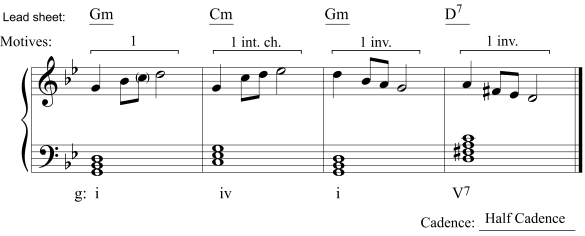
11.6.4.
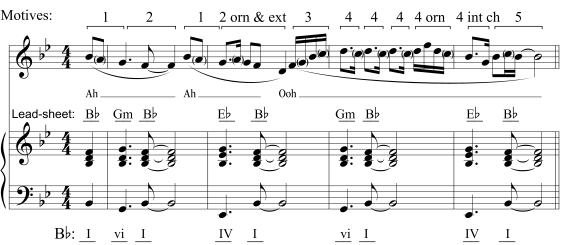
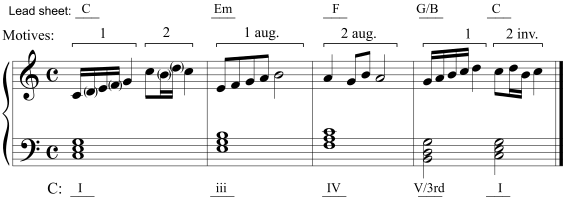
Answer.
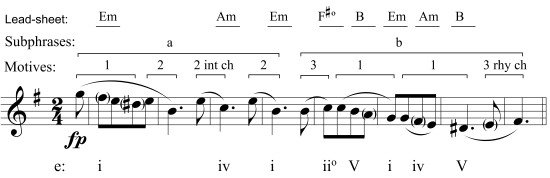
12 Form in Popular Music
12.6 Practice Exercises
12.6.1.
Answer.
She’s Out of My Life:
-
0:00–0:40, Introduction, approx. 4 bars of keyboard
-
0:40–1:25, A, 12 bars
-
1:25–2:05, A, 11 bars
-
2:05–2:35, B, 8 bars
-
2:35–3:33, A, 13 bars
Penny Lane:
-
0:00–0:20, Verse 1, 8 bars
-
0:20–0:38, Verse 2, 8 bars
-
0:38–0:54, Chorus, 8 bars
-
0:54–1:11, Verse 3, 8 bars
-
1:11–1:28, Trumpet Solo on Verse progression, 8 bars
-
1:28–1:45, Chorus, 8 bars
-
1:45–2:02, Verse 4, 8 bars
-
2:02–2:19, Verse 5, 8 bars
-
2:19–2:36, Chorus, 8 bars
-
2:36–3:02, Chorus a whole step higher, 9 bars
13 Phrases in Combination
13.9 Practice Exercises
13.9.1. Mozart, “Ein Mädchen oder Weibchen,”The Magic Flute.
13.9.2. Mozart, Piano Sonata K. 333, I.
Answer.
Mozart, Piano Sonata K. 333, I:
-
Chords: \(\left.\text{vii}^{\circ}{}\right.\)–\(\left.\text{I}\right.\), \(\left.\text{vi}\right.\)–\(\left.\text{V}\right.\), \(\left.\text{vii}^{\circ}{}\right.\)–\(\left.\text{I}\right.\), \(\left.\text{V}\right.\)–\(\left.\text{I}\right.\)
-
Cadences: IAC, HC, IAC, PAC
-
The 2nd phrase is a sentence
-
Melodic labels: a, b, a, b’
-
Form: parallel double period
13.9.3. Edmond Dédé, Chicago, Grande Valse à l’Américaine.
16 Figured Bass
16.6 Practice Exercises
16.6.1.
Answer.
-
Lead-sheet: 1. \(\left.\text{C}\middle/\text{G}\right.\); 2. \(\left.\text{B}^{\circ}{}\middle/\text{D}\right.\); 3. \(\left.\text{Dm}\middle/\text{A}\right.\); 4. \(\left.\text{G}\right.\)
-
Figured bass: 1. \(\left.\text{I}^{6}_{4}\right.\); 2. \(\left.\text{vii}^{\circ}{}^{6}\right.\); 3. \(\left.\text{ii}^{6}_{4}\right.\); 4. \(\left.\text{V}\right.\)
16.6.2.
Answer.
-
Lead-sheet: 1. \(\left.\text{Em7}\middle/\text{G}\right.\); 2. \(\left.\text{G7}\middle/\text{F}\right.\); 3. \(\left.\text{Cmaj7}\middle/\text{G}\right.\); 4. \(\left.\text{Fmaj7}\right.\)
-
Figured bass: 1. \(\left.\text{iii}^{6}_{5}\right.\); 2. \(\left.\text{V}^{4}_{2}\right.\); 3. \(\left.\text{IM}^{4}_{3}\right.\); 4. \(\left.\text{IVM}^{7}\right.\)
16.6.3.
Answer.
-
Lead-sheet: 1. \(\left.\text{D}^{\circ}{}\middle/\text{F}\right.\); 2. \(\left.\text{A}^♯{}^{\circ}{}^{7}\middle/\text{G}\right.\); 3. \(\left.\text{E}^ø{}^{7}\right.\); 4. \(\left.\text{Dmaj7}\middle/\text{F}^{♯}\right.\)
-
Figured bass: 1. \(\left.\text{ii}^{\circ}{}^{6}\right.\); 2. \(\left.\text{vii}^{\circ}{}^{4}_{2}\right.\); 3. \(\left.\text{vii}^ø{}^{7}\right.\); 4. \(\left.\text{IM}^{6}_{5}\right.\)
16.6.4.
Answer.

16.6.5.
Answer.
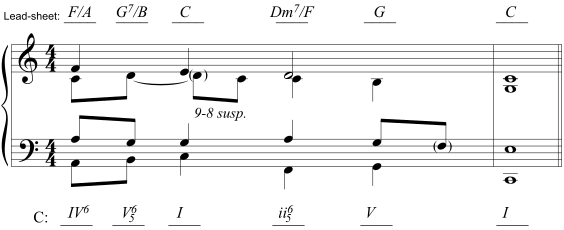
17 Secondary Dominant Chords
17.7 Practice Exercises
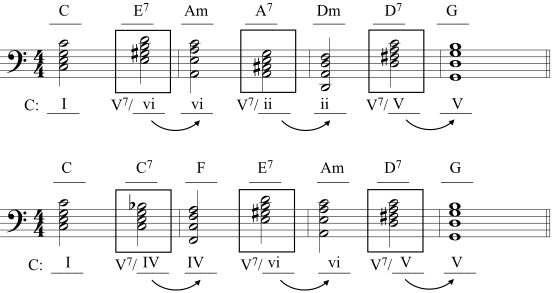
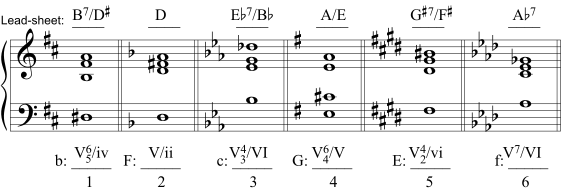
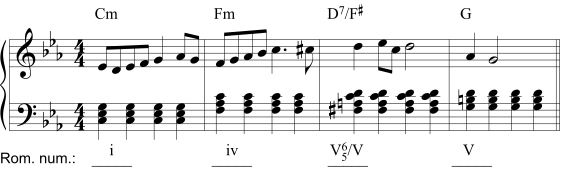
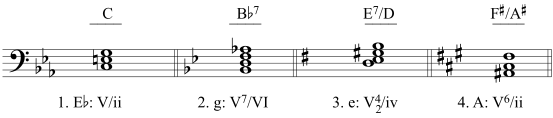
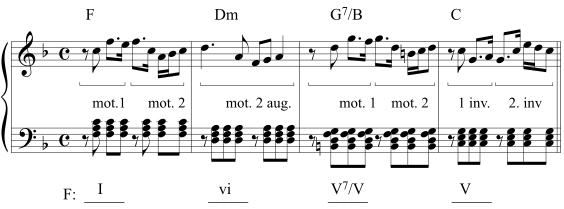
18 Secondary Diminished Chords
18.5 Practice Exercises
18.5.1.
Answer.
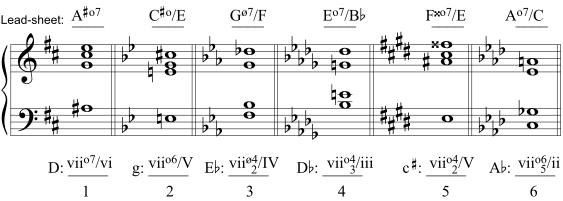
18.5.2.
Answer.
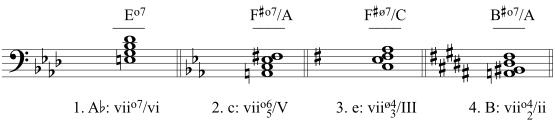
18.5.3.
Answer.
-
Lead–sheet: 1. \(\left.\text{F}\right.\); 2. \(\left.\text{Am}\right.\); 3. \(\left.\text{B}^♭{}\right.\); 4. \(\left.\text{F}^♯{}^{\circ}{}^{7}\right.\); 5. \(\left.\text{D}\middle/\text{F}^{♯}\right.\); 6. \(\left.\text{Gm}\right.\)
-
Figured bass: 1. \(\left.\text{I}\right.\); 2. \(\left.\text{iii}\right.\); 3. \(\left.\text{IV}\right.\); 4. \(\left.\text{vii}^{\circ}{}^{7}\middle/\text{ii}\right.\); 5. \(\left.\text{V}^{6}\middle/\text{ii}\right.\); 6. \(\left.\text{ii}\right.\)
19 Mode Mixture
19.6 Practice Exercises
19.6.1.
Answer.
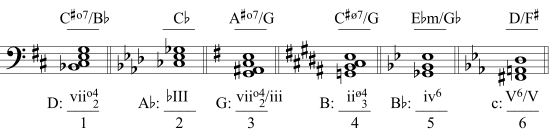
19.6.2.
Answer.
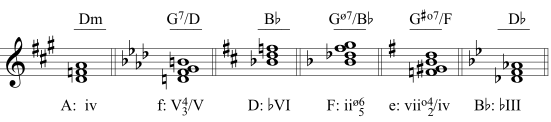
19.6.3.
Answer.
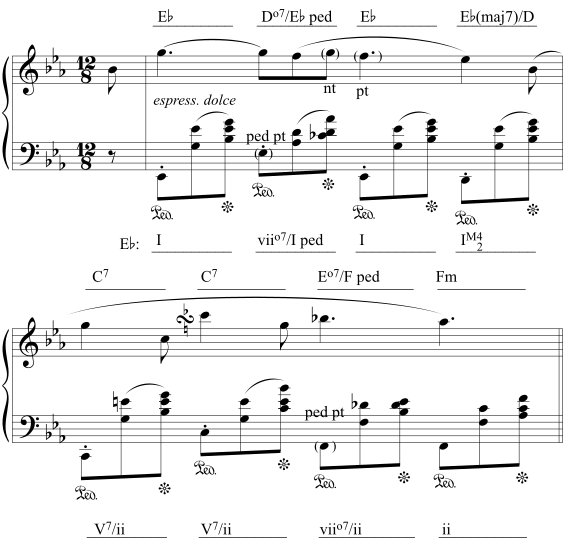
20 The Neapolitan Chord
20.3 Practice Exercises
20.3.1.
Answer.
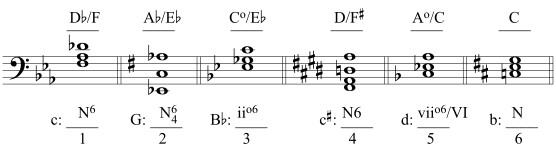
20.3.2.
Answer.
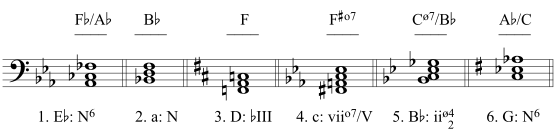
21 Augmented Sixth Chords
21.9 Practice Exercises
21.9.1.
Answer.
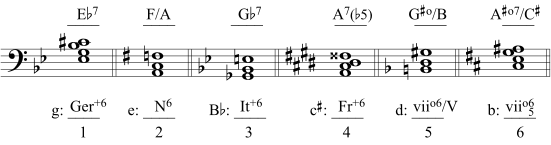
21.9.2.
Answer.
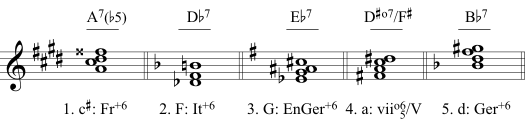
22 Modulation
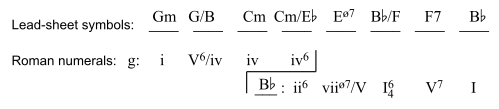
22.8 Practice Exercises



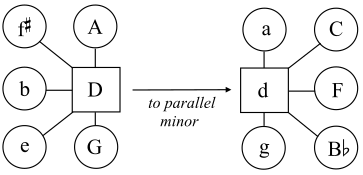
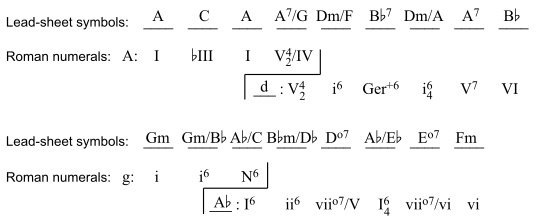
23 Enharmonic Modulation
23.4 Practice Exercises
24 Binary and Ternary Forms
24.9 Practice Exercises




24.9.3.
Answer.
24.9.4.
Answer.

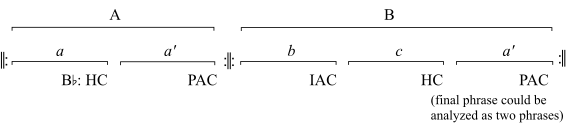
Two-Reprise Continuous Ternary, if looking at the proportion, or Two-Reprise Continuous Rounded Binary, if you interpret the first two notes in bar 13 as being built from the first two notes in bar 1—and if you are considering that Mozart, as a Classical-era composer, is likely to compose a rounded binary. Two-Reprise Continuous Balanced Binary is a label that describes that the endings of the halves are the same, but doesn’t take into account the return of the opening material in bar 21.

25 Sonata and Rondo Forms
25.6 Practice Exercises
25.6.1.
Answer.
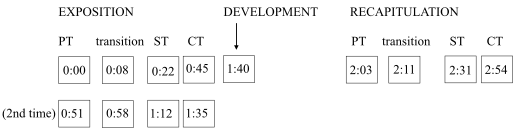
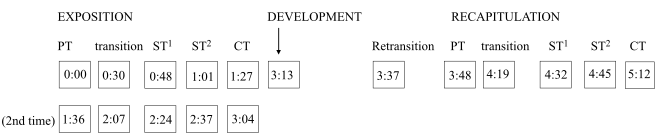
-
Haydn: Expository
-
Beethoven: Developmental
-
Mozart K. 576: Transitional
-
Mozart K. 550: Developmental
-
Mozart K. 309: Expository
-
Haydn: Terminative
-
Mozart K. 309: Transitional
-
Mozart K. 576: Terminative
-
Mozart K. 310: Terminative
-
Haydn: Transitional
-
Mozart K. 457: Expository
-
Mozart K. 550, IV: Developmental
25.6.2.
26 Voice Leading Triads
26.13 Practice Exercises
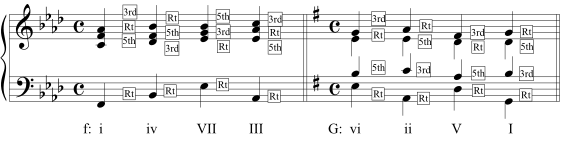
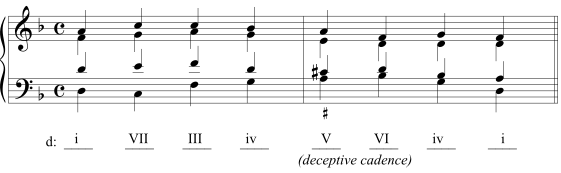
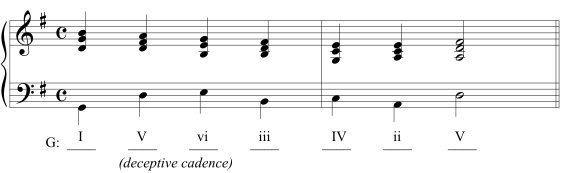
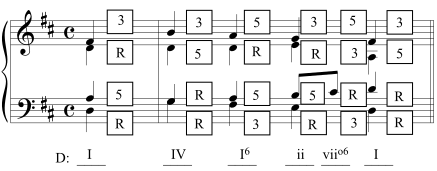
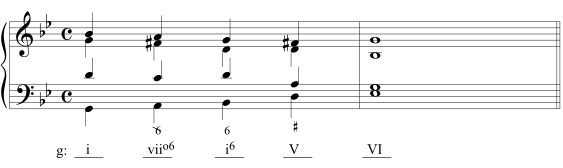
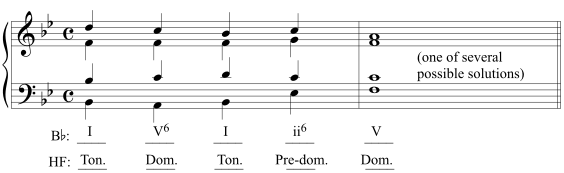
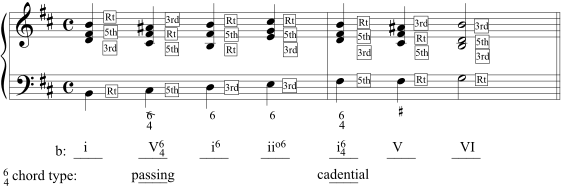
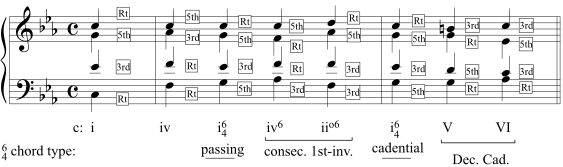
27 Voice Leading Seventh Chords
27.6 Practice Exercises
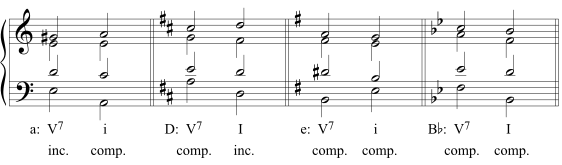
27.6.1.
Answer.
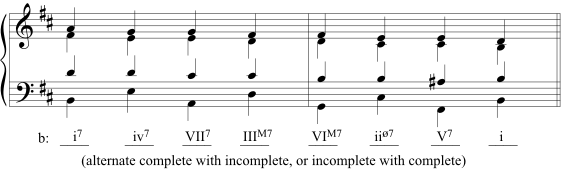
27.6.2.
Answer.
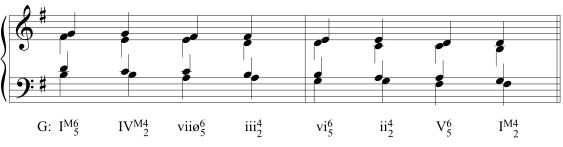
27.6.3.
Answer.
28 Voice Leading With Non-Chord Tones
28.4 Practice Exercises
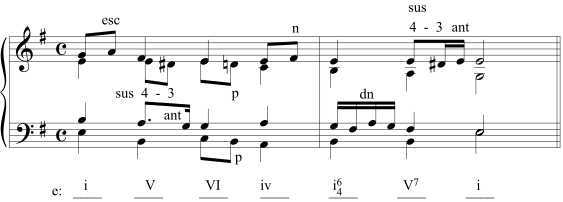
28.4.1.
Answer.
28.4.2.
Answer.
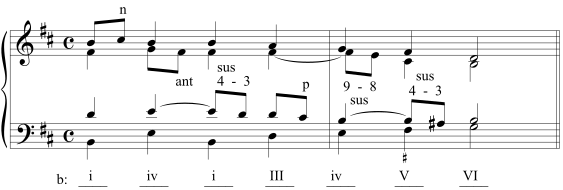
28.4.3.
Answer.
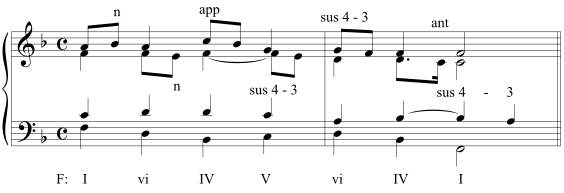
29 Voice Leading Chromatic Harmonies
29.5 Practice Exercises
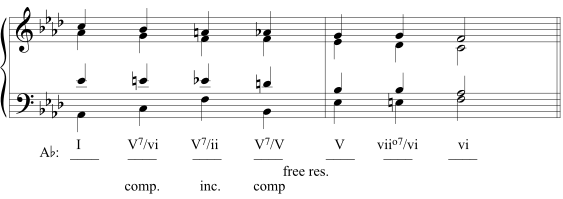
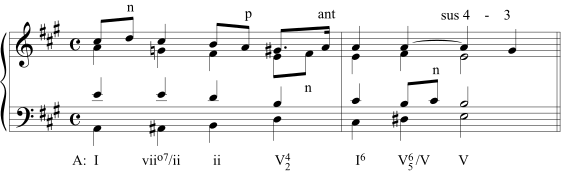
29.5.3.
Answer.
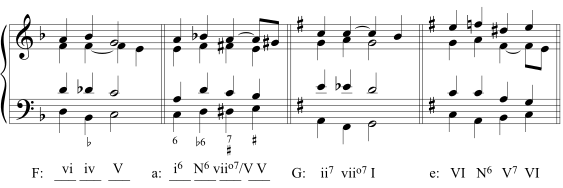
29.5.4.
Answer.
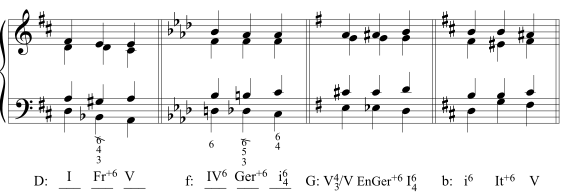
29.5.5.
Answer.
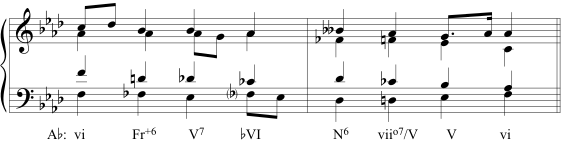
30 Introduction to Counterpoint
30.9 Practice Exercises
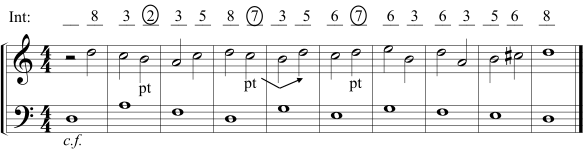
First and Second Species Exercises
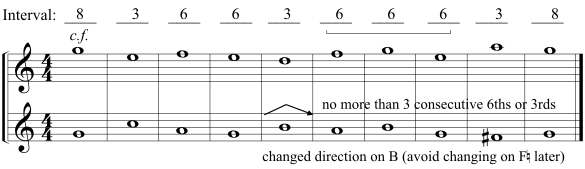
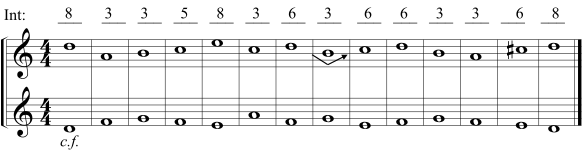
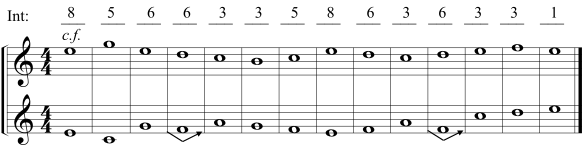
30.9.1.
Answer.
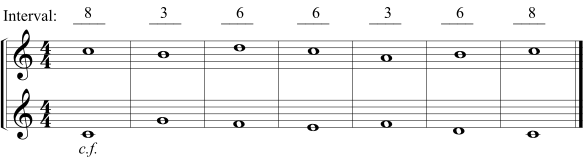
30.9.2.
Answer.
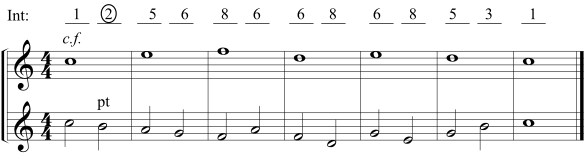
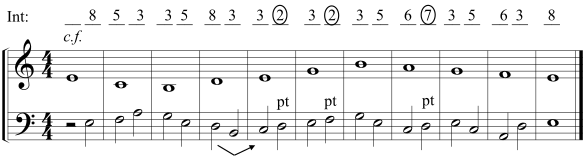
Species Counterpoint: Day Two
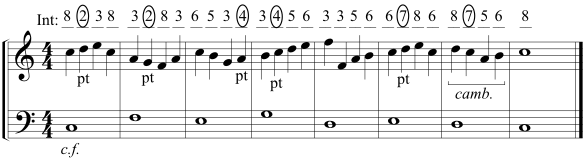
30.9.3.
Answer.
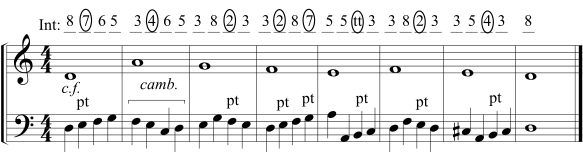
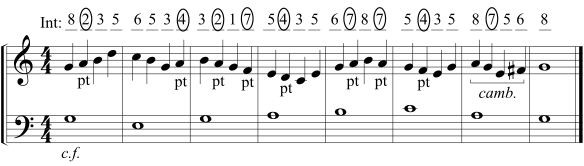
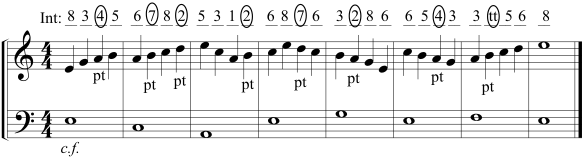
30.9.4.
Answer.
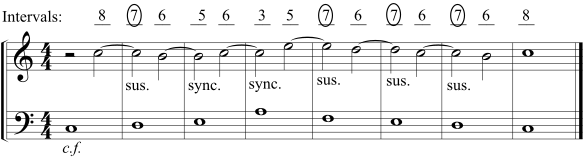
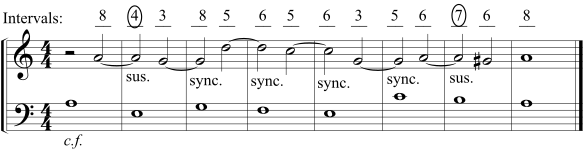
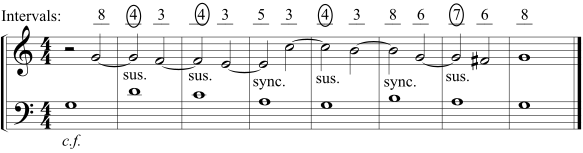
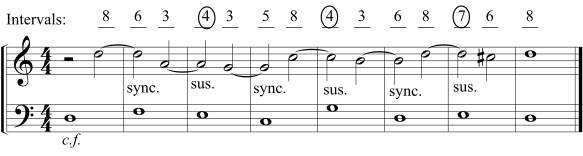
Invention Expositions
30.9.5.
Answer.
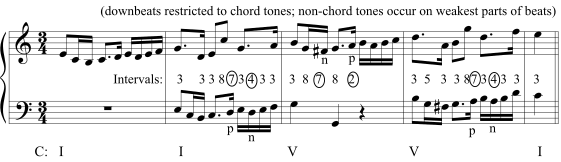
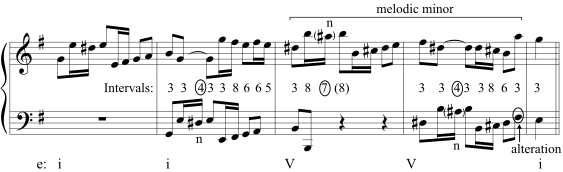
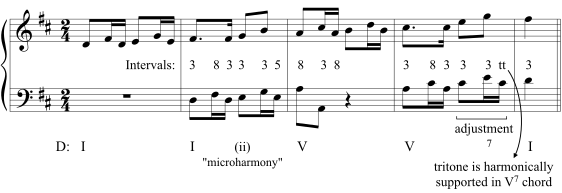
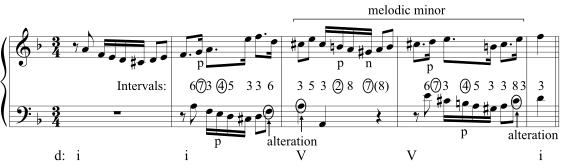
Fugue Analysis
30.9.6.
Answer.
| FORM | Exposition 1 | |||||||
| SOPRANO | ||||||||
| ALTO | ||||||||
| TENOR | Subject | |||||||
| BASS | Subject | Subject | Sub. | Countersubject | ||||
| KEY | F♯m | C♯m | ||||||
| Meas. | 1 | 2 | 3 | 4 | ||||
| l | ||||||||
| FORM | (Bridge) | |||||||
| SOPRANO | ||||||||
| ALTO | ||||||||
| TENOR | Subject | Bridge Mot. A | Bridge Mot. A | Bridge Mot. A | ||||
| BASS | Countersubject | Bridge Mot. B | Bridge Mot. B | Bridge Mot. B | ||||
| KEY | ||||||||
| Meas. | 5 | 6 | 7 | 8 | ||||
| l | ||||||||
| FORM | Exposition 1 (continues until 4th voice has subject) | |||||||
| SOPRANO | Subject | |||||||
| ALTO | Subject | Subject | Sub. | Countersubject | ||||
| TENOR | Countersubject | Countersubject | C.S. | Ctrpt | ||||
| BASS | Ctrpt | Ctrpt | Ctrpt | Ctrpt | ||||
| KEY | F♯m | C♯m | ||||||
| Meas. | 9 | 10 | 11 | 12 | ||||
| l | ||||||||
| FORM | Episode 1 | |||||||
| SOPRANO | Subject | Bridge Mot. A | Bridge Mot. A | |||||
| ALTO | Countersubject | Bridge Mot. B | Mot. B | Ctrpt | Ctrpt | |||
| TENOR | Ctrpt | Ctrpt | Ctrpt | Ctrpt | ||||
| BASS | Ctrpt | |||||||
| KEY | ||||||||
| Meas. | 13 | 14 | 15 | 16 | ||||
| l | ||||||||
| FORM | Exposition 2 | |||||||
| SOPRANO | Cadential | Ctrpt | Ctrpt | Ctrpt | ||||
| ALTO | Cadential | Subject | Subject | Subject | ||||
| TENOR | Cadential | Ctrpt | Ctrpt | Ctrpt | ||||
| BASS | ||||||||
| KEY | F♯m | |||||||
| Meas. | 17 | 18 | 19 | 20 | ||||
31 Introduction to Jazz Theory
31.12 Practice Exercises
31.12.1.
Answer.


31.12.2.
Answer.

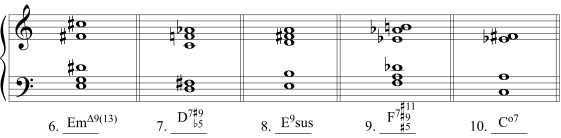
31.12.3.
Answer.
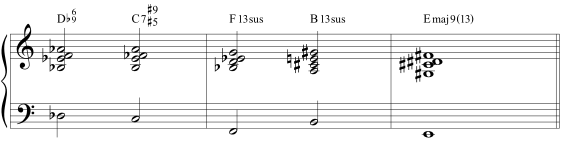


31.12.6.
Answer.

32 Impressionism and Extended Tonality
32.5 Practice Exercises
33 Set Theory
33.9 Practice Exercises
33.9.1.
Answer.
-
Normal form is [0, 2, 7]. Prime form is (027).
-
Normal form is [1, 3, 6, 8]. Prime form is (0257).
-
Normal form is [6, 10, 11, 1]. Prime form is (0237).
-
Normal form is [7, 8, 0, 3]. Prime form is (0158).
-
Normal form is [11, 0, 1, 4, 6]. Prime form is (01257).
-
Normal form is [6, 7, 10, 11, 2]. Prime form is (01458).
-
Normal form is [9, 10, 0, 1, 4, 6]. Prime form is (013479).
33.9.2.
Answer.
| Set | Normal Form | Prime Form | Forte Number | Interval Vector |
| 1 | [11, 1, 3, 5, 6] | (01357) | 5–24 | 131221 |
| 2 | [5, 8, 10, 0] | (0247) | 4–22 | 021120 |
| 3 | [9, 0, 1, 4, 5] | (01458) | 5–21 | 202420 |
| 4 | [3, 5, 6, 10] | (0237) | 4–14 | 111120 |
| 5 | [2, 3, 6, 7, 9, 10] | (013478) | 6–Z19 | 313431 |
| 6 | [2, 3, 5, 6, 9, 10] | (013478) | 6–Z19 | 313431 |
34 Serialism
34.7 Practice Exercises
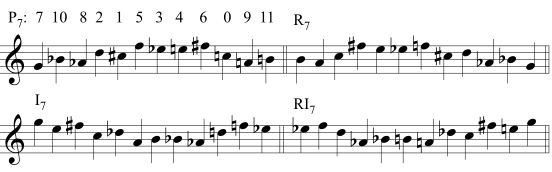




34.7.3.
Answer.
| I\(\text{}_{3}\)↓ | I\(\text{}_{7}\)↓ | I\(\text{}_{11}\)↓ | I\(\text{}_{1}\)↓ | I\(\text{}_{5}\)↓ | I\(\text{}_{0}\)↓ | I\(\text{}_{2}\)↓ | I\(\text{}_{10}\)↓ | I\(\text{}_{6}\)↓ | I\(\text{}_{4}\)↓ | I\(\text{}_{8}\)↓ | I\(\text{}_{9}\)↓ | ||
| P\(\text{}_{3}\)→ | E♭ | G | B | C♯ | F | C | D | B♭ | G♭ | E | G♯ | A | ←R\(\text{}_{3}\) |
| P\(\text{}_{11}\)→ | B | D♯ | G | A | C♯ | G♯ | A♯ | F♯ | D | C | E | F | ←R\(\text{}_{11}\) |
| P\(\text{}_{7}\)→ | G | B | D♯ | F | A | E | F♯ | D | B♭ | A♭ | C | D♭ | ←R\(\text{}_{7}\) |
| P\(\text{}_{5}\)→ | F | A | C♯ | E♭ | G | D | E | C | A♭ | G♭ | B♭ | B | ←R\(\text{}_{5}\) |
| P\(\text{}_{1}\)→ | D♭ | F | A | B | E♭ | B♭ | C | A♭ | E | D | G♭ | G | ←R\(\text{}_{1}\) |
| P\(\text{}_{6}\)→ | G♭ | B♭ | D | E | A♭ | E♭ | F | D♭ | A | G | B | C | ←R\(\text{}_{6}\) |
| P\(\text{}_{4}\)→ | E | G♯ | C | D | G♭ | D♭ | E♭ | B | G | F | A | B♭ | ←R\(\text{}_{4}\) |
| P\(\text{}_{8}\)→ | A♭ | C | E | G♭ | B♭ | F | G | E♭ | B | A | D♭ | D | ←R\(\text{}_{8}\) |
| P\(\text{}_{0}\)→ | C | E | A♭ | B♭ | D | A | B | G | E♭ | D♭ | F | G♭ | ←R\(\text{}_{0}\) |
| P\(\text{}_{2}\)→ | D | F♯ | A♯ | C | E | B | D♭ | A | F | E♭ | G | A♭ | ←R\(\text{}_{2}\) |
| P\(\text{}_{10}\)→ | B♭ | D | G♭ | A♭ | C | G | A | F | D♭ | B | D♯ | E | ←R\(\text{}_{10}\) |
| P\(\text{}_{9}\)→ | A | C♯ | F | G | B | F♯ | A♭ | E | C | B♭ | D | E♭ | ←R\(\text{}_{9}\) |
| ↑RI\(\text{}_{3}\) | ↑RI\(\text{}_{7}\) | ↑RI\(\text{}_{11}\) | ↑RI\(\text{}_{1}\) | ↑RI\(\text{}_{5}\) | ↑RI\(\text{}_{0}\) | ↑RI\(\text{}_{2}\) | ↑RI\(\text{}_{10}\) | ↑RI\(\text{}_{6}\) | ↑RI\(\text{}_{4}\) | ↑RI\(\text{}_{8}\) | ↑RI\(\text{}_{9}\) |
34.7.4.
Answer.
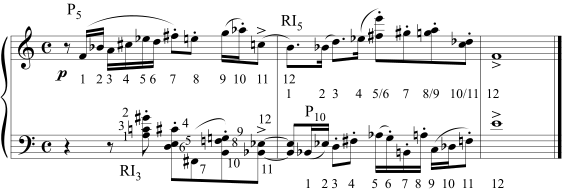
34.7.5.
Answer.
-
Set 1: 3, 7, 11. Normal form: [3, 7, 11] Prime form: (048) Interval vector: 000300
-
Set 2: 1, 5, 0. Normal form: [0, 1, 5] Prime form: (015) Interval vector: 100110
-
Set 3: 2, 10, 6. Normal form: [2, 6, 10] Prime form: (048) Interval vector: 000300
-
Set 4: 4, 8, 9. Normal form: [4, 8, 9] Prime form: (015) Interval vector: 100110

